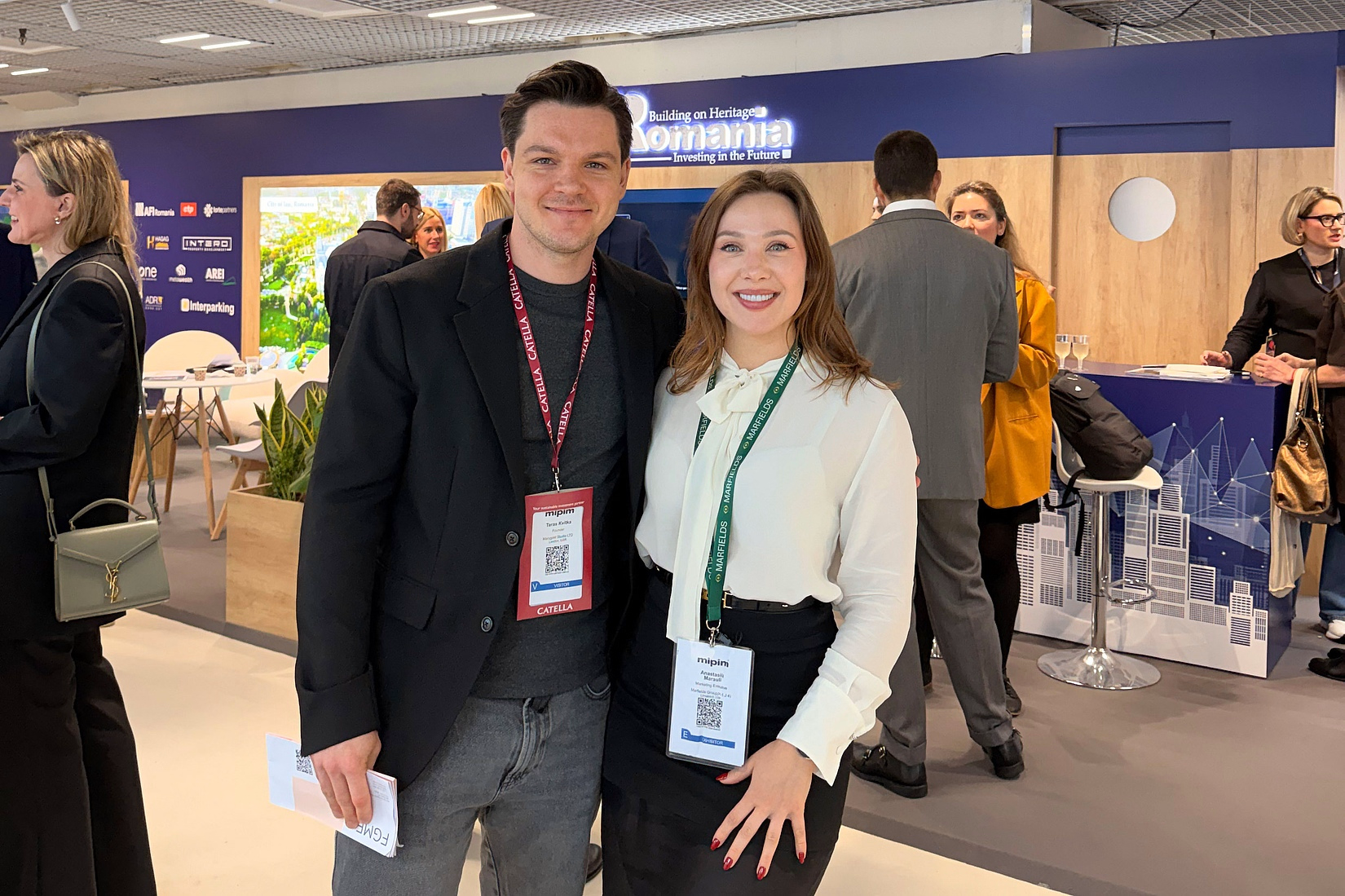
Taras Kvitka runs Marygold, a studio doing architecture, visualization, and brand strategy from London and Dubai. The combination is unusual. The clients aren't: developers, investment funds, architects. He has a Master's in Architecture and Design and a separate degree in Business Administration of Innovative Startups — which mostly means he can sketch a building and read a term sheet.
He started in 2014 with Submarina, a small CGI studio focused on competition visuals for architects. Pre-AI, each project meant weeks of iteration: turning an architect's rough thinking into images that could move a jury. The clients were serious — Zaha Hadid, Mandaworks, Schauman & Nordgren, Gossamer & Arcadis.
He sold Submarina in 2020. He wanted to work earlier in the process — not rendering decisions that had already been made, but helping developers and investors decide what a project was actually for. That became Marygold — a boutique agency specialising in luxury real estate branding, with offices in London and Dubai.
Today, Marygold Studio works with Foster + Partners, Zaha Hadid Architects, Red Sea Global, Ellison Institute of Technology, Four Seasons, and others. The job is branding: making a building explainable and desirable before most buyers have seen it in person. Get the narrative right, and a buyer's questions answer themselves.
"Each project has its own DNA," Taras says. A tower on the Dubai waterfront is a different story from a cultural landmark in London. Marygold's job is figuring out which story it is.
We talked about what branding means for high-end real estate, how developers compete in a saturated market, and what rising prices and the conflict in Iran might mean for Dubai property.
First of all, why did you decide to focus on developers rather than expand your branding practice into other industries?
Thank you for having me.
I originally studied architecture, and becoming an architect was my primary passion during my university years. Since graduating in 2014, I’ve witnessed significant shifts in the real estate industry — from mixed-use, multifunctional developments to a strong emphasis on high-rise residential projects. More recently, driven by COVID and the rise of remote work, the focus has evolved even further toward creating residential environments that prioritize comfort, flexibility, and quality of life.
Architecture has always remained at the center of my interests — both professionally and personally. It’s something I continuously observe, analyze, and engage with. Because of that, focusing on developers felt like a natural and authentic direction, rather than expanding into unrelated industries. It allows me to stay deeply connected to a field I genuinely care about.
Why does real estate need branding at all? Isn’t it just about location and budget?
That’s what everyone thinks — and that’s exactly where most developers lose money.
Yes, people filter by location, budget, and square meters. That’s the rational layer. But no one chooses based on that alone. If that were true, every project in the same area would sell equally fast — and we know that’s not the case.
Buying property is one of the biggest decisions in a person’s life. And big decisions are never purely rational — they’re emotional first, and then justified with logic.
Branding is what creates that emotional pull. It gives the project a personality, a point of view. It answers questions like: Is this me? Do I belong here? Does this reflect who I am — or who I want to become?
Because in reality, people don’t buy square meters. Square meters are a commodity.
People buy identity. They buy status. They buy a feeling about their future life.
And when that feeling clicks, the deal doesn’t need to be pushed — it happens naturally, and much faster.
What does a luxury real estate branding strategy typically consist of? What's the structure?
It varies depending on the geography and the market, but at the same time, real estate — just like people — is becoming more global. We all share similar desires, expectations, and lifestyles today.
At its core, every strong real estate brand has a clear DNA. And typically, it consists of a few key elements:
Naming + Promise
The name isn’t just a label — it sets the tone and carries a promise of what this place represents.
Positioning & Strategy
What is this project, really? Is it premium, lifestyle-driven, investment-focused? What’s its status, its design philosophy, its audience?
Visuals (CGIs / Renders)
These are the key selling tools. We usually focus on what we call “hero moments” of the project — aerial views, street-level perspectives, amenities, interiors, terraces, and views from the windows. This is where people start to emotionally connect.
Brand Film
This is becoming increasingly important. It’s essentially a trailer for a future lifestyle — not just showing the building, but selling the experience of living there.
3D Spinner / Digital Twin
A fully interactive version of the project — often web-based — where you can rotate the building, study sunlight, explore the neighborhood, understand connections, and, of course, select specific units.
All of these tools span digital platforms, print materials, and physical spaces such as sales centers and large-format presentations.
How does the execution of these assets affect sales?
Today, it’s all about trust.
People trust projects that present themselves properly — with high-quality, consistent branding. You can’t sell a luxury property with cheap visuals or a weak brochure. The level of execution sets the perceived value immediately.
Good campaigns and PR amplify results, of course. But if the branding is wrong, sales become difficult — teams have to push instead of attract.
Because branding isn’t decoration — it’s about aligning the product with what the customer actually wants.
And when that alignment is right, sales happen much faster and more naturally.
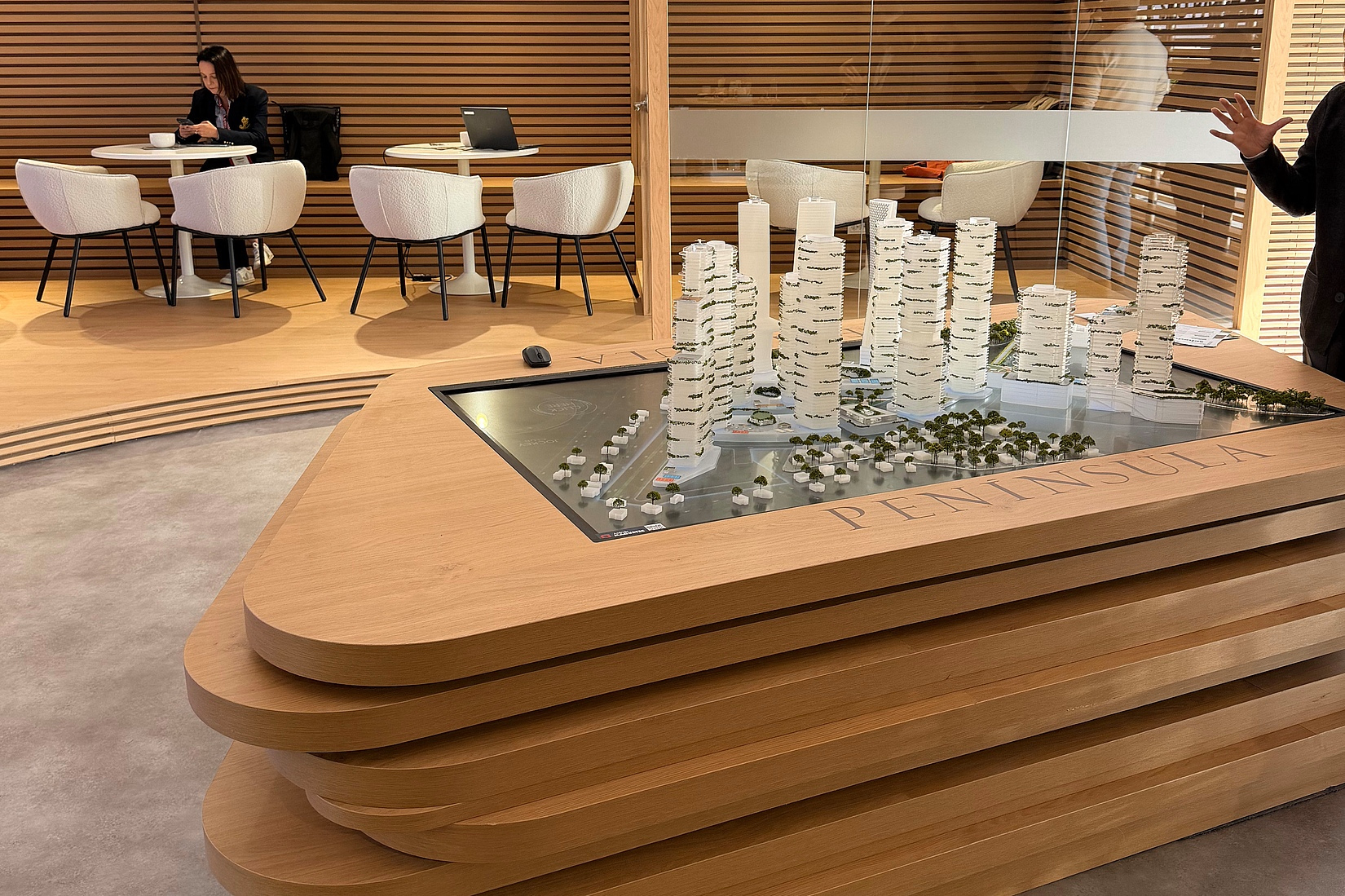
How important is it to be at the center of attention today?
I believe attention today is the most expensive currency. And it’s extremely fragmented.
Businesses are constantly fighting for it — from smartphones, which are the biggest players, to streets, public transport, billboards, and everywhere in between.
But in real estate, the goal isn’t to be the most viral. We’re not selling T-shirts — we’re selling very high-value assets.
What really matters is understanding your buyer — their expectations, desires, and lifestyle — and reflecting that both in the architecture and in the brand.
Our role in luxury property branding is to activate that brand and place it in the right channels — very targeted ones. That could be private clubs, curated events, specific media, influencers, and brokerage networks.
So it’s not about maximum attention — it’s about the right attention.
What is in the most demand these days?
Of course, it depends on the price segment. But overall, developers who focus on delivering a complete, thoughtfully designed living experience are clearly outperforming others.
"I'm talking about projects where every detail is actually thought through. From the quality of water and air, to highly functional layouts, to beautifully designed amenity spaces. And importantly, design that isn’t just following trends, but is actually built around comfort and everyday living."
The developers who win today are the ones who obsess over details. Because that’s exactly what buyers feel — even if they can’t always explain it.
And in some cases, this level of quality can even outperform traditionally dominant factors like location.
So are trends like sustainability and mixed-use developments no longer leading?
Yes and no.
"Sustainability has become a standard — buyers expect it now, it no longer sets you apart. It’s expected, not something that differentiates a project anymore."
As for mixed-use developments, they’re becoming less dominant, especially in major developed cities. High-end buyers — particularly high-income individuals — are increasingly prioritizing privacy, comfort, and a more refined living experience.
So while mixed-use still has its place, the demand is shifting toward more focused, residential-led environments with strong design and a clear lifestyle proposition.
How can AI help real estate developers in sales and project execution?
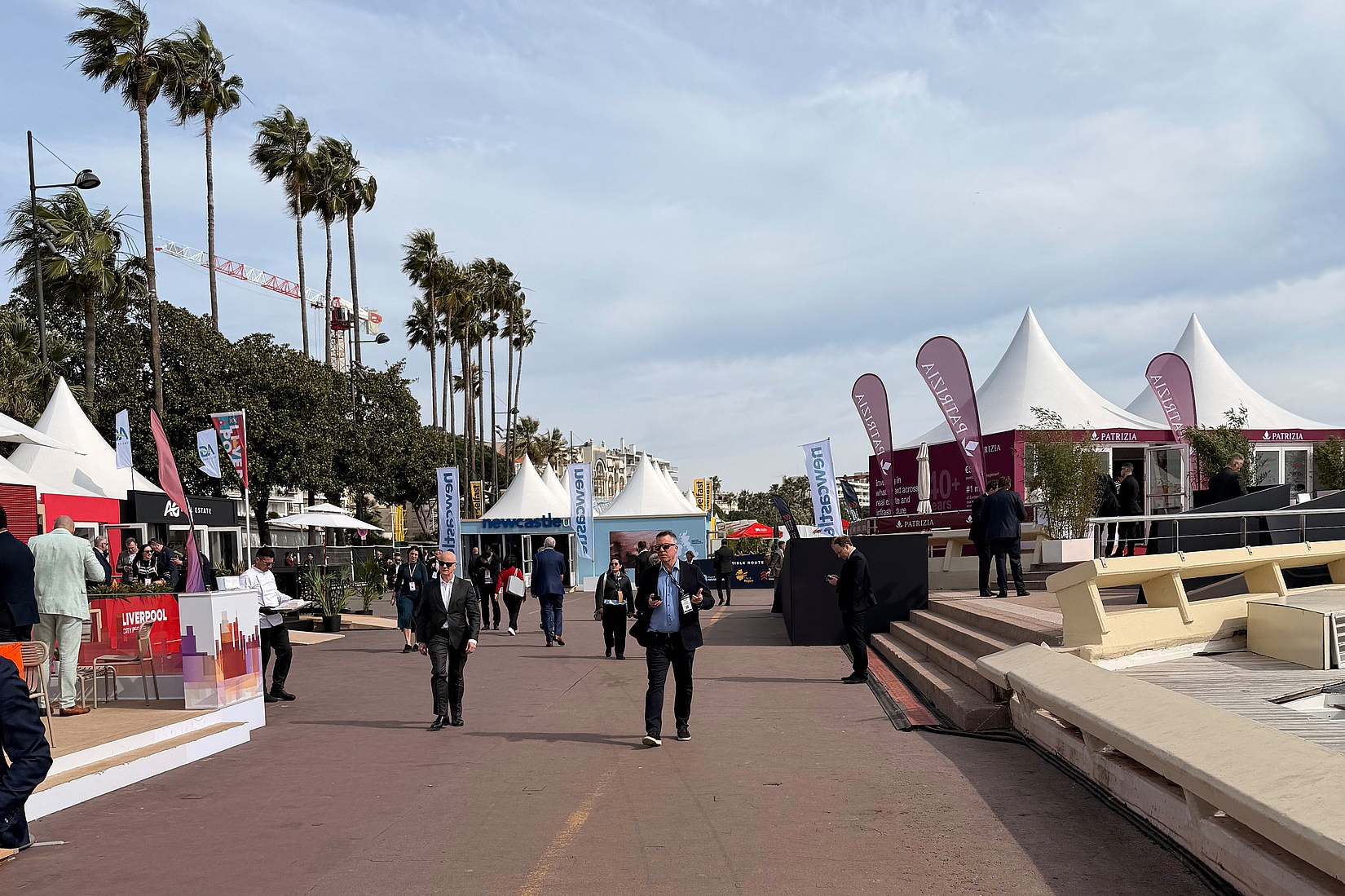
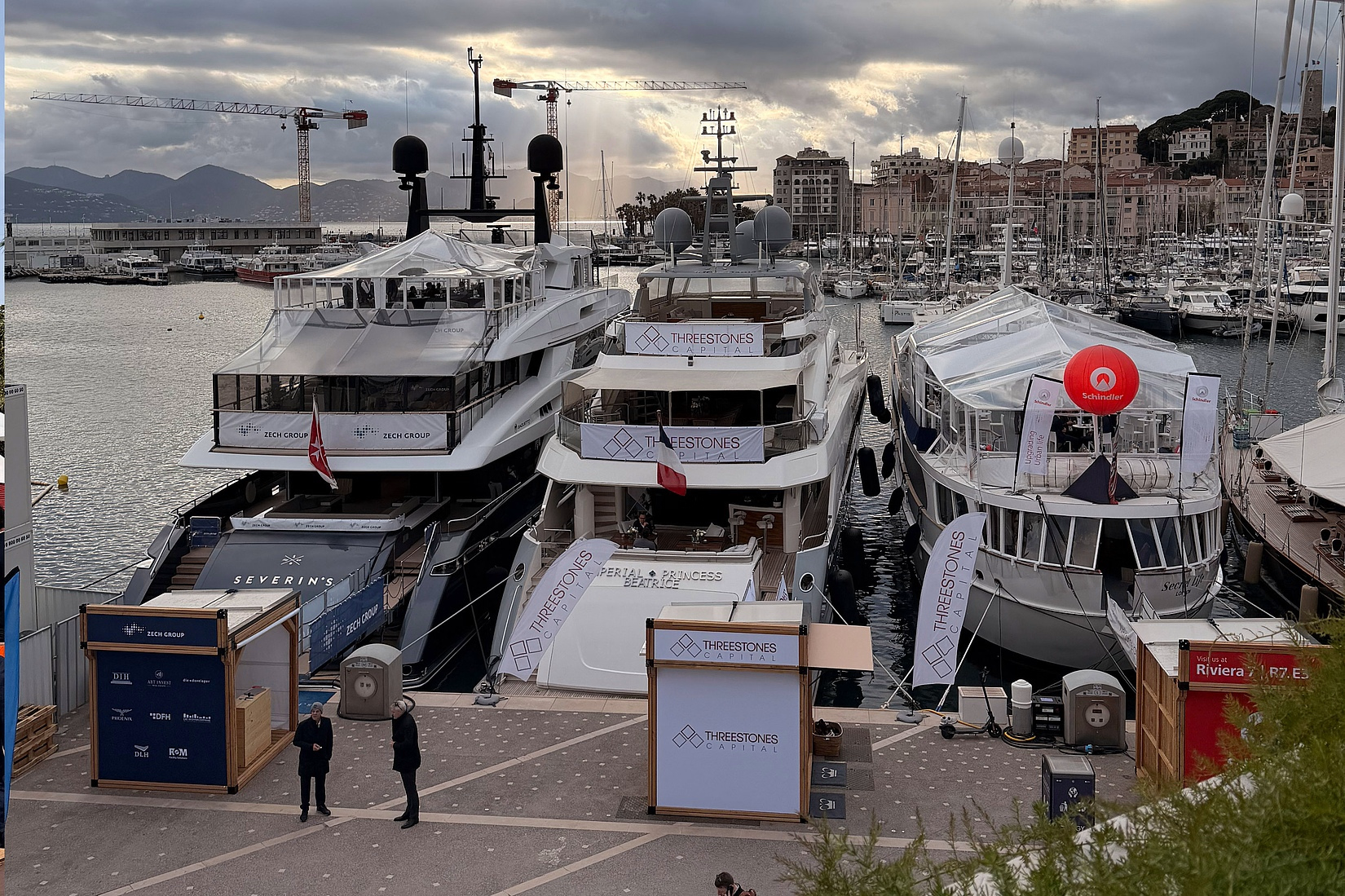
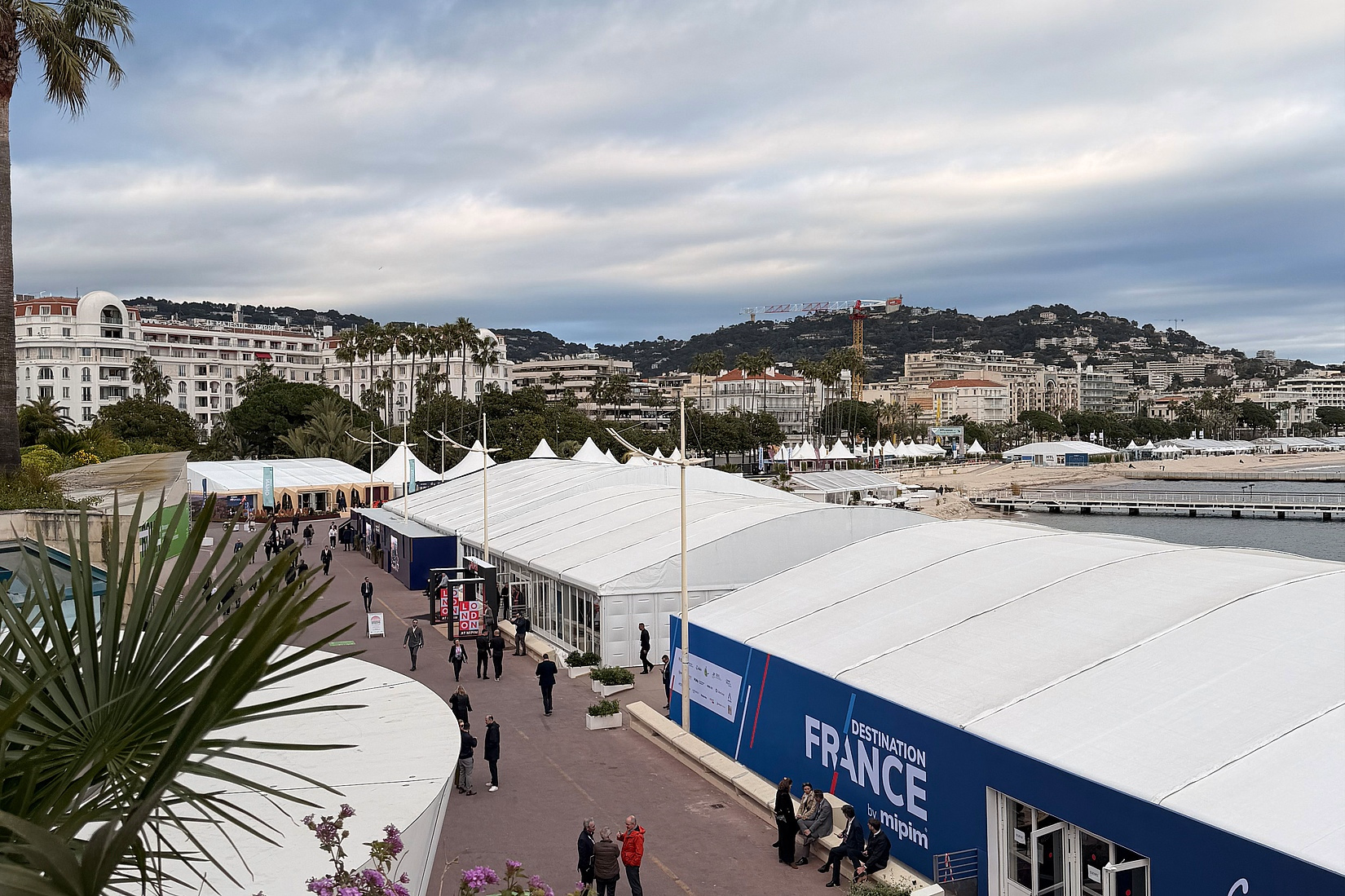
That’s a very interesting question. I was at MIPIM 2026 recently, and a big part of my conversations there was exactly about this — how developers are using AI today, and what they expect from it.
What I found was quite surprising. Most developers aren’t using AI heavily yet, but expectations are very high. They believe it will reduce costs across design, branding, marketing, and operations.
In reality, though, we’re still in an early stage. Some are experimenting with AI-generated concepts or automation, but so far, it hasn’t led to major breakthroughs — mostly smaller, simpler applications.
Real estate is a very traditional and fundamentally human business. Success still comes down to understanding your customer, choosing the right location, and delivering strong design.
AI will definitely support efficiency — especially in production, analysis, and maybe even early-stage ideation. But when it comes to sales and client relationships, it’s hard to replace the human factor.
Because buying real estate — especially off-plan — is built on trust. And trust is still very much a human-to-human interaction.
Do you think geopolitical tensions, like a potential conflict with Iran and rising energy demand, will affect the real estate market?
Yes — and in many ways, it already is.
But to be fair, the shifts in real estate started earlier, right after COVID. We’ve seen rising costs across development, construction, and materials. Margins are still strong in the luxury segment, but that’s also where the barrier to entry is very high. Overall, quality real estate is becoming less affordable globally.
Looking at markets like Dubai, demand remains relatively strong, even though there have been some fluctuations in tourism. Buyers are starting to expect price adjustments, but many brokers and developers are holding their ground for now.
If we see a prolonged energy crisis, it will likely reduce the volume of new developments. But at the same time, it could push the market toward building better — with higher quality, more efficient design, and a stronger focus on environmental performance.
So fewer projects, perhaps — but more thoughtful ones.
And the last question — what future trends do you see in real estate, and what new things can be used in branding and advertising?
Honestly, everyone talks about the future — I prefer to focus on what’s already happening now.
If we’re serious about it, one of the biggest trends is safety and a sense of control. People want to feel secure — not just physically, but in how they live their lives. Projects that can offer that, combined with clean, sustainable design and a focus on smaller, like-minded communities, are already leading the market.
In terms of branding, it’s becoming much more precise and intentional. Clear messaging, strong visuals, and films that truly reflect the client’s expectations — with less noise overall. If you’re selling at a high level, you don’t need to be everywhere — you need to be in the right places.
That said, visual execution is critical — it’s where you simply can’t afford mistakes.
And of course, sales and advertising are becoming increasingly digital. Interactive tools, digital twins, mobile-first experiences — these are no longer “nice to have,” they’re expected.
At the end of the day, every project needs a simple, powerful digital entry point — a link that can tell the story quickly, emotionally, and convincingly.