


In this article, we explore how luxury real estate marketing transcends traditional methods to engage high-end buyers through cinematic storytelling, exclusive digital experiences, and concierge-level service. Whether you are a realtor or a developer, you will discover strategies to sell a lifestyle that feels both aspirational and deeply personal.
Luxury real estate marketing is not just bigger-budget real estate promotion. It is a different discipline with different buyer psychology, presentation standards, and conversion mechanics. In the high-end segment, the listing has to feel curated before the first inquiry, the visuals have to carry emotional weight, and the brand around the property has to signal confidence without slipping into noise.
Based on our experience, the projects that win attention fastest are rarely the ones shouting the loudest. They are the ones who feel the most considered, utilizing:
- subtle design cues
- high-fidelity spatial storytelling
- a deep understanding of the buyer’s desire for discretion.
This creates an environment of effortless sophistication rather than a mere sales pitch. This matters because luxury buyers do not respond to mass-market tactics in the same way.
Industry reports frame the category around exclusivity, world-class architecture, privacy, technology, and prime location, while architectural visualization experts emphasize that successful luxury campaigns must spotlight distinctive features and the lifestyle they support. In other words, luxury property marketing has to sell more than square footage. It has to sell meaning, taste, and a believable version of life inside the asset.
At Marygold Studio, we see this from the visual side every day. Our team builds 3D renderings, films, digital campaigns—including 3D reels creation services—and virtual walkthroughs for real estate and design-led projects, which means we spend a lot of time studying why some listings feel instantly desirable, and others feel technically complete but emotionally flat.
This perspective is evident in Marygold Studio’s case studies, such as Brazos Street. Here, visuals transcend mere architectural polish to frame properties as immersive experiences—capturing the sensory allure of an entrance, the movement of light, and the tactile suggestion of quality. This precision defines luxury marketing; a high-fidelity render or 3D reel doesn't just document a space, it establishes a memorable visual rhythm.
We find that the most effective luxury strategies seamlessly unify narrative, premium assets, and concierge-level service into a singular, coherent brand ecosystem.

Why Marketing Luxury Real Estate Is Different
Higher expectations: design, storytelling, and brand experience matter more
Based on our experience, selling luxury real estate requires positioning the property as a curated brand experience rather than a mere commodity, ensuring it speaks to those who value exclusivity over mass-market accessibility.
Our specialists point out that in luxury, every design choice on a landing page has to reinforce trust, credibility, and exclusivity, while other experts in the industry note that luxury homes are marketed through immersive visuals and storytelling rather than plain specifications. That is why weak copy, generic gallery layouts, and thin listing pages feel especially costly at the top of the market.
Longer consideration cycles and multiple decision-makers
The luxury market usually has a longer path to conversion. There may be a principal buyer, family members, advisors, attorneys, or investment partners involved in the decision. Our specialists also point out that many upscale clients are established professionals or entrepreneurs whose purchase decisions are driven more by wants than needs, which changes both the tone and the pacing of communication. A hurried, overly promotional approach can weaken trust rather than accelerate interest.
Privacy, trust, and exclusivity are part of the “product”
Our specialists name discretion and privacy among the core challenges of marketing luxury listings, and it is right to do so. In this segment, privacy is not a side concern. It is often part of the value proposition itself. The same is true of exclusivity. If the campaign feels too broad, too loud, or too public too early, it can erode the very aura the listing needs to preserve.
What Counts as a Luxury Home?
Market Positioning vs. Fixed Price
A luxury home in one city may be a standard upper-tier listing in another. That is why luxury real estate marketing strategies should start with positioning instead of an abstract price threshold. Our specialists recommend deep market analysis on price point before launch, while industry analysts stress that luxury value is tied to location, design, exclusivity, and narrative, not just cost. The market decides the bracket; your positioning explains why the property belongs in it.
Typical luxury indicators
Most premium properties share a cluster of recognizable signals that define their status in the market. These core indicators include:
- prime location
- architectural authorship or distinction
- unusual scale
- bespoke finishes
- advanced technology;
- resort-grade amenities
- strong privacy
- a clear lifestyle promise.
Standard industry distinctions between luxury and traditional homes also emphasize size, smart technology, and custom design as recurring markers. Because these elements shape both buyer perception and price tolerance, they should be the primary focus of your marketing narrative.
Luxury homes vs. traditional homes
Traditional real estate marketing often leans on practicality, value, and broad utility. Luxury real estate advertising has a different job. It has to frame the property as a singular opportunity and convey why the experience of living there is rare. Market leaders put this difference plainly: mainstream listings tend to focus on price value and convenience, while luxury listings emphasize uniqueness, exclusivity, and dream-level lifestyle. That distinction should affect everything from the photography brief to the CTA.
Understanding Today’s Affluent Buyer
Today’s affluent audience is digitally fluent, visually demanding, and often globally mobile. They expect the discovery process to feel smooth, fast, and polished across devices. Industry data reports that 81% of buyers rated listing photos as the most useful feature during their online home search, and search engine guidance emphasizes map-based property discovery and richer information access during the earliest search phase. Even when a purchase is highly emotional, the path into it often begins with highly practical digital behavior.
The affluent buyer is also not one persona. Our specialists note that younger affluent buyers can differ sharply from wealthy retirees in channel preference, message response, and expectations. Real estate experts make a similar point through demographics and service style: this audience is not uniform, and the more expensive the listing, the more damaging lazy assumptions become.
A waterfront wellness residence, a branded penthouse, and an architect-led desert retreat may all be “luxury,” but they do not speak to the same dream.
Based on our observations, this is where many teams misfire. They build a polished campaign, but they do not define the right client deeply enough. When that happens, the visuals may be beautiful, yet the message misses the people with the highest potential to convert. A stronger luxury real estate marketing plan begins with persona, location context, decision criteria, and a clear idea of what the buyer is actually upgrading into.
Key takeaway: To truly resonate with affluent buyers, luxury marketing must move beyond broad appeal and instead use precise, data-driven personas to deliver a highly tailored and exclusive brand experience.
Luxury Real Estate Marketing Ideas That Attract High-End Buyers
Idea 1: Tell a Compelling Property Narrative
A luxury listing without a story becomes a set of features competing against other sets of features. A narrative gives the property structure and emotional direction. Our specialists recommend shaping a memorable personality and brand story around the asset, often enhanced by 3D walkthrough services that allow buyers to live the story before they visit. Meanwhile, industry experts point out that beautifully written property descriptions and digital storybooks can elevate the presentation dramatically. If the residence has architectural heritage, an unusual site, a wellness angle, or a design philosophy, build from that.
Idea 2: Invest in High-End Photography
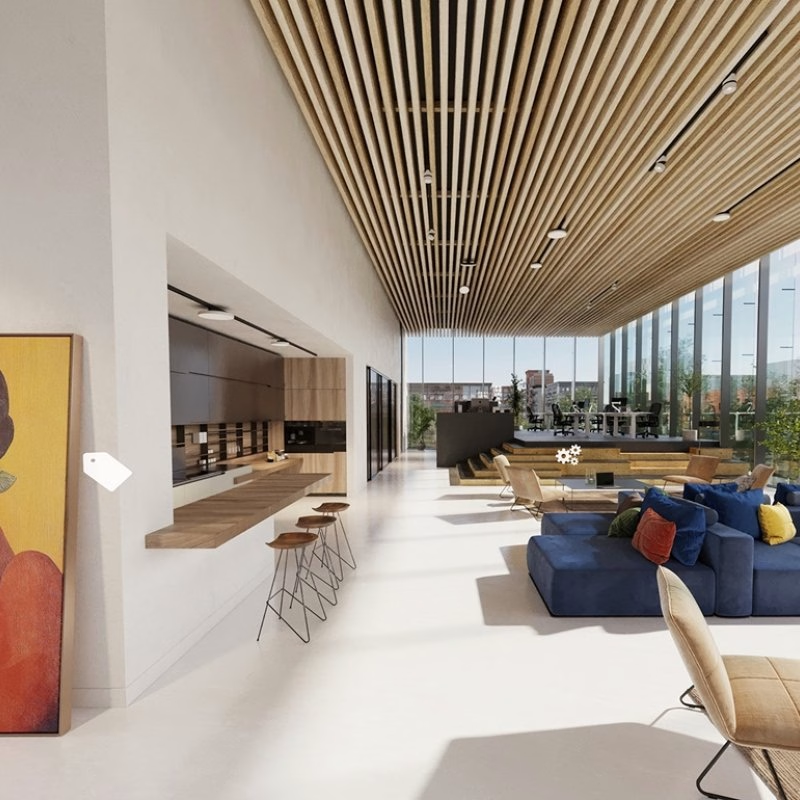
High-quality visuals are not optional in this category. Industry data says listing photos are the most useful online search feature for buyers, and marketing specialists point to premium presentation as one of the common traits across effective luxury campaigns. Photography should not just document rooms. It should communicate atmosphere, sequence, detail, and scale. A luxury home has to feel intentional in still frames before it can earn a viewing.
Idea 3: Use Cinematic Video Marketing
Video is especially powerful when the home’s value is spatial, emotional, or tied to movement through the environment. Visualization experts recommend spotlighting distinctive features and lifestyle fit, and Marygold Studio’s Films & Animations service is built around directed lifestyle storytelling that combines CGI and curated footage for a stronger narrative experience. This matters when you want to sell arrival, sunset views, amenity rhythm, neighborhood mood, or branded residence identity rather than isolated rooms.
Idea 4: Add 3D, Immersive Tours, and Floor Plans
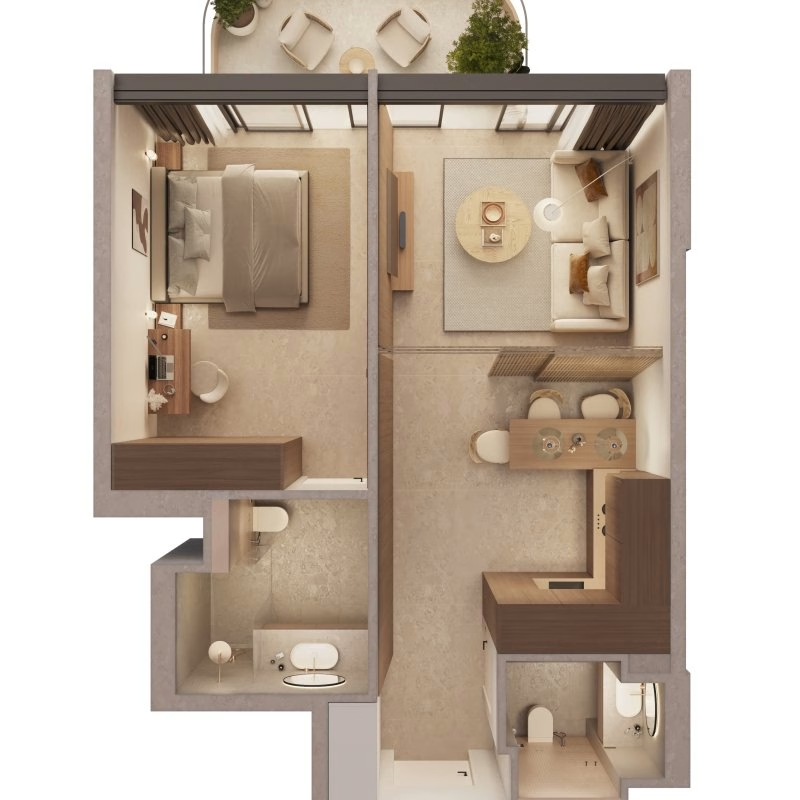
Virtual tools help buyers qualify themselves faster. Our specialists position immersive media as part of a multi-pronged luxury strategy, and Marygold Studio’s virtual walkthroughs are designed so prospects can move through unbuilt or not-yet-visited spaces, switch materials, adjust lighting, and engage with embedded information. Marygold’s own blog also notes that virtual tours save time for both realtors and clients and have become a particularly strong competitive tool for premium presentations. For distant buyers, a high-quality real estate floor plan service or 3D tour can be the bridge between curiosity and serious intent.
Idea 5: Build a Dedicated Property Website or Landing Page
MLS exposure is useful, but it is rarely enough for premium listings. Our specialists argue that in luxury real estate, the landing page often makes the first impression and must balance strong visuals, precise copy, friction-light forms, mobile performance, and trust signals. A dedicated site or landing page gives the property room to breathe. It lets you control the hierarchy, place the CTA correctly, segment traffic, and present the brand without platform clutter.
Idea 6: Create Premium Print Assets
Print still matters in the luxury market when it behaves like an object worth keeping. High-end publishers continue to position print and digital together for premium exposure, and industry experts recommend upscale publications and refined physical collateral as part of luxury outreach. A brochure, booklet, or invitation card should feel editorial, tactile, and restrained. Done properly, print supports exclusivity rather than looking like traditional mass mail.
Idea 7: Promote Through Exclusive Channels
Luxury listings should not live only where every other listing lives. Industry leaders recommend high-end publications and luxury-focused websites, and specialists make a similar case for premium media environments and high-value advertising options. Exclusive channels help protect positioning by placing the property near the right audience and the right visual standards. They also reinforce the sense that this is not just another home on the market.
Idea 8: Host Invite-Only Events and Private Showings
Marketing experts explicitly recommend exclusive events to connect with affluent homebuyers, while our specialists suggest offering top clients off-market previews as part of a more personalized customer experience. For the right property, a private dinner, design conversation, art-led preview, or sunset showing can outperform a general open house. The point is not spectacle. It is relevance, access, and control.
Idea 9: Use Strategic Social Media Marketing
Social media matters, but curation matters more. Industry veterans recommend targeted social campaigns for luxury listings, and Marygold Studio’s digital marketing service is centered on reaching the right people with attention-grabbing reels rather than merely growing follower counts. A polished social media strategy should mix hero content with shorter narrative pieces:
- detail-led clips
- lifestyle edits
- neighborhood context
- behind-the-scenes design moments
- proof of exclusivity.
Quantity is not the goal. Reaching the right audience is.
Idea 10: Run Smart Digital Advertising
Luxury real estate advertising works best when the targeting is narrow, the creative is elevated, and the follow-up is ready. Media analysts cite digital ads as visibility channels for premium listings, while our specialists note that real estate PPC costs vary widely and can exceed $100 per click in highly competitive luxury markets. That means indiscriminate paid campaigns are expensive. The better strategy is focused ads, retargeting, and tighter audience definitions built around geography, lifestyle, and intent.
Idea 11: Publish Content That Builds Authority
Content is not only for SEO. It builds confidence. Our real estate SEO guidance makes the point that keyword strategy should be tied to qualified traffic and project visibility, while Marygold’s render-focused articles show how contextual visuals and neighborhood framing help shape perception. Publish neighborhood guides, architectural notes, design explainers, investment context, and amenity-led stories. This is especially effective when the property has a stronger narrative than a standard listing can hold.
Idea 12: Leverage PR, Media, and Influencers Carefully
PR can be useful, but in luxury, it has to be selective. Experts suggest upscale publications and special events because they align with wealthy buyers’ media habits. That does not mean every influencer partnership is smart. In many cases, editorial coverage, architecture press, design media, and tightly matched tastemaker voices outperform broad creator campaigns because they preserve credibility and tone.
Idea 13: Build a Concierge-Level Buyer Experience
Luxury agents recommend a concierge mindset, and our specialists frame personalization as the core of a better customer experience. This idea should influence every touchpoint: response times, showing cadence, travel coordination, document delivery, discretion, and after-viewing follow-up. The campaign may attract the lead, but the experience often closes the relationship. For affluent clients, polish is not a bonus feature. It is part of the product.
Idea 14: Strengthen Partnerships That Feed Luxury Listings
Luxury real estate marketing strategies often improve when the listing is supported by aligned partners: architects, interior designers, lifestyle brands, art advisors, hospitality operators, and premium local businesses. Industry experts recommend partnerships with luxury brands, and Marygold’s work on projects like The One and House of Well shows how strong visuals, reels, and lifestyle positioning can elevate developments aimed at premium buyers and investors. Good partnerships multiply visibility while strengthening the brand language around the property.
Ways to Connect With Affluent Homebuyers
Affluent homebuyers are rarely reached through a single channel. The most effective approach is layered. Use search-ready landing pages for active demand, private events for warmer leads, visual social media for attention, and direct relationship-building for serious prospects.
Industry studies note that real estate discovery increasingly depends on richer digital search experiences, while our specialists highlight lead capture and minimal-friction landing pages as central tools for turning interest into inquiries.
Based on our experience, high-end clients also respond well when the outreach feels informed rather than aggressive. That could mean:
- Sending a private deck after a referral
- Tailoring a viewing around a buyer’s schedule and interests
- Sharing a short film instead of a dense brochure.
For some clients, an art-driven visual hook works. For others, architectural credibility or privacy will matter more. The key is to create a tailored path into the listing rather than pushing everyone through the same funnel.
Putting Your Luxury Marketing Strategy Into Action
Step 1: Define persona + positioning + narrative
Start by deciding exactly who the listing is for, how it should be positioned in its market, and what story holds everything together. Our specialists recommend researching the market and defining a brand identity before creative execution, while industry experts recommend developing client personas so messaging fits expectations and motivations more precisely. This is the strategic layer that makes later creative choices sharper.
Step 2: Produce premium visual assets
Once the positioning is clear, build the visual package. That usually means:
- Photography
- Cinematic video
- 3D renderings where needed
- Floor plans and virtual tours
Industry data makes clear that visuals drive online decision-making, and Marygold’s services show how renderings, walkthroughs, reels, and film can be combined into one stronger system for a launch-ready presentation.
Step 3: Launch dedicated landing + email + ads + outreach
Use a dedicated property page or landing page as the campaign core, then support it with email, social, paid campaigns, and selective outreach. Our specialists emphasize CTAs, forms, mobile optimization, and trust signals on luxury pages, while media experts argue for a blend of digital and print exposure rather than relying on one outlet alone. This is the moment to unify the asset, the message, and the channels.
Step 4: Retarget and nurture qualified leads
Not every interested visitor is ready today. Retargeting, email nurture, and concierge follow-up help keep serious leads warm without making the campaign feel mass-market. Our specialists frame personalization as a driver of future business, and our broader luxury guidance stresses consistent follow-up because visibility alone rarely converts premium buyers.
Step 5: Review results and refine weekly
A good luxury real estate marketing plan is not static. Review the following metrics weekly:
- page engagement
- ad quality
- lead quality
- inquiry sources
- showing outcomes
If the audience is wrong, fix the targeting. If the traffic is strong but inquiries are weak, revisit the CTA, form friction, or narrative. If views are high but conversions are low, the experience may be polished but not persuasive enough. Luxury campaigns often improve through refinement rather than wholesale reinvention.
Bringing It All Together
How to sell luxury real estate comes down to one principle: do not market it like ordinary real estate. The property needs more than exposure. It needs a point of view. It needs a visual system that does justice to the architecture, a content strategy that frames the lifestyle honestly, and a client journey that feels as curated as the home itself. The strongest campaigns combine art and precision. They showcase what is rare, protect what is private, and reach buyers through the channels and experiences that actually fit the asset.
Drawing on our own experience, we would add one more thought. The best luxury listings rarely depend on one hero tactic. Not on photography alone, not on social media alone, not on a landing page alone. They work because the narrative, visuals, media mix, and follow-up all reinforce one another. That is the real strategy behind selling luxury real estate well. And that is why luxury real estate marketing ideas only become effective when they are built into one coherent launch system.


